What happens during your pets dental procedure?
What Happens During Your Pet's Dental Procedure?
One of the questions we hear most often is, "What actually happens while my pet is in hospital for their dental?" While your pet is with us for just a few hours, there's a lot happening behind the scenes to ensure their procedure is as safe, comfortable and thorough as possible.
Here's a step-by-step look at what your pet's dental day involves.
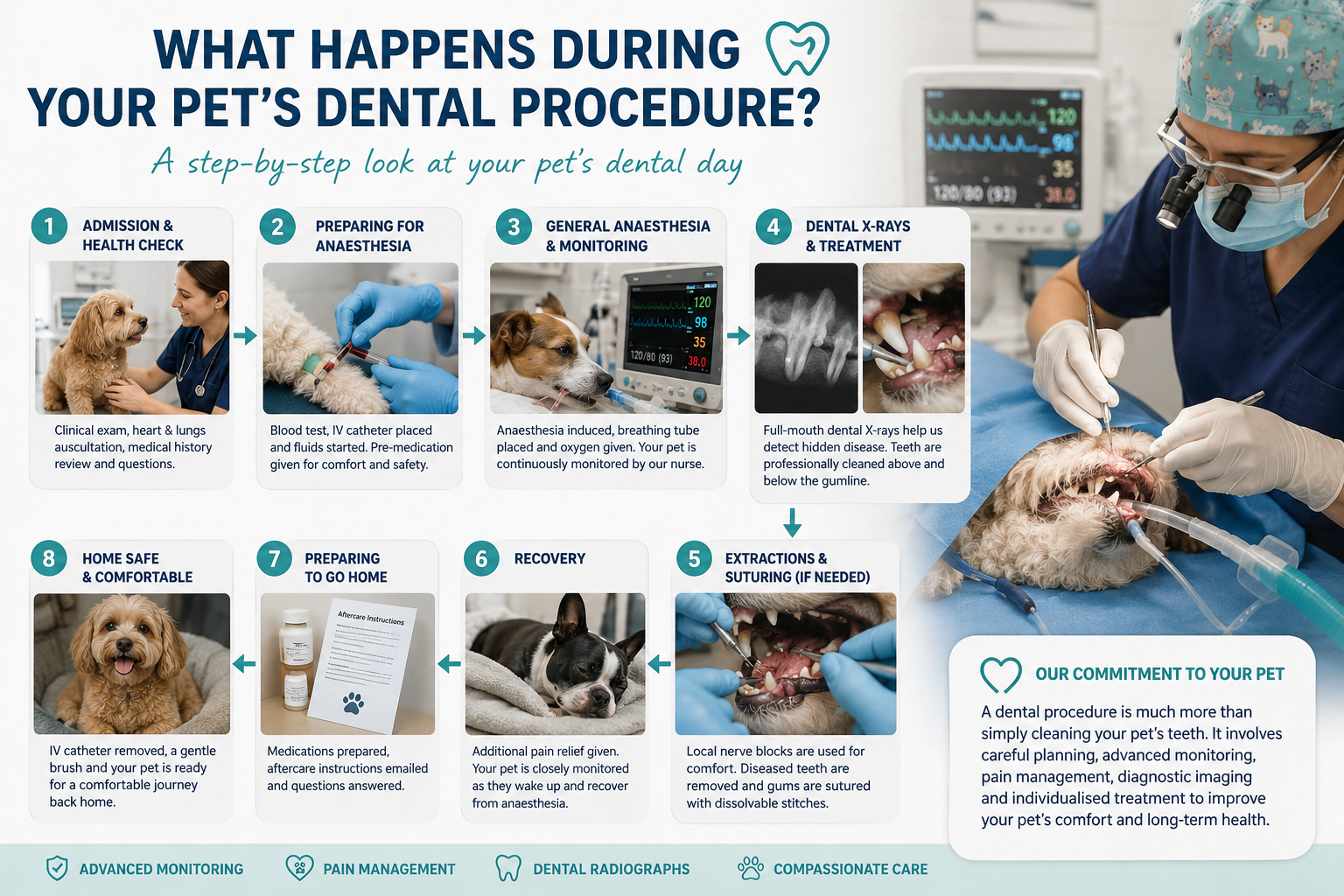
Admission and Health Check
Your pet's day begins with an admission appointment between 8:00 am and 9:00 am. One of our veterinarians will perform a thorough clinical examination, listen to your pet's heart and lungs, review their medical history and answer any last-minute questions you may have. This is also the perfect opportunity to discuss any concerns or changes you've noticed since your pet's pre-operative consultation.
Preparing for Anaesthesia
Once admitted to hospital, one of our veterinary nurses will collect a small blood sample. Pre-anaesthetic blood testing allows us to assess your pet's organ function, including their liver and kidneys, and helps us ensure it is safe to proceed with a general anaesthetic.
An intravenous (IV) catheter is then placed into a vein, allowing us to administer medications safely and efficiently throughout the procedure. Intravenous fluids are also started to help maintain blood pressure, support circulation and keep your pet well hydrated during their anaesthetic.
Once the blood results have been reviewed and the veterinarian is happy that it is safe to proceed, your pet receives their pre-medication. This combination of medications helps reduce anxiety, provides early pain relief and allows for a smoother induction of anaesthesia.
General Anaesthesia and Monitoring
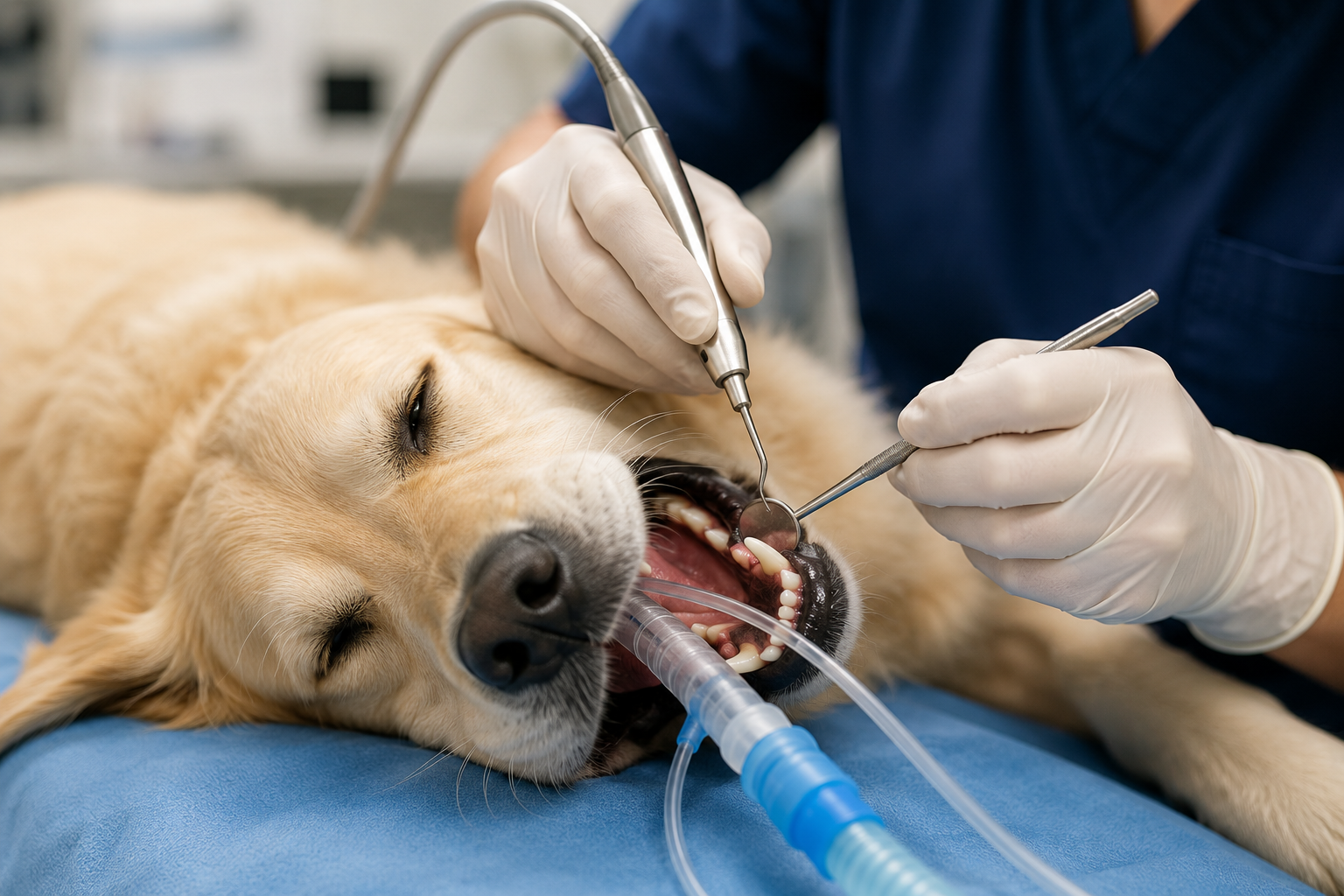
When your pet is relaxed, the veterinarian gently induces general anaesthesia using medications administered through the IV catheter. A breathing tube is then placed to protect the airway and deliver oxygen and anaesthetic gas throughout the procedure.
Throughout the entire anaesthetic, a dedicated veterinary nurse remains with your pet, continuously monitoring their vital signs. Advanced monitoring equipment allows us to closely track:
· Heart rate
· Respiratory rate
· Blood oxygen levels (SpO₂)
· End-tidal carbon dioxide (ETCO₂)
· Body temperature
· Blood pressure
This close monitoring enables us to quickly identify and respond to even subtle changes, helping to keep your pet as safe as possible.
Dental X-rays and Treatment
Before cleaning the teeth, we perform full-mouth dental radiographs (X-rays). Around 60% of a tooth lies beneath the gumline, meaning many painful dental conditions cannot be seen during a visual examination alone. Dental X-rays allow us to identify hidden disease such as tooth root infections, bone loss, fractured teeth and retained roots.
Once the assessment is complete, we perform a professional ultrasonic scale and polish to remove plaque and tartar from both above and below the gumline.
If any diseased, loose or damaged teeth require removal, the veterinarian will administer local nerve blocks to numb the area before carefully extracting the affected teeth. Using nerve blocks significantly reduces pain during and after the procedure and often lowers the amount of general anaesthetic required.
Following any extractions, the gum tissue is sutured closed using dissolvable stitches to promote healing and improve comfort during recovery.
Recovery
Before your pet wakes up, they receive additional pain relief and anti-inflammatory medication as required to keep them as comfortable as possible.
Your pet is then closely monitored by one of our veterinary nurses throughout their recovery from anaesthesia. We carefully observe their breathing, heart rate, temperature and comfort level until they are awake, warm and able to stand safely.
Preparing to Go Home
While your pet is recovering, we prepare any take-home medications they may need, such as pain relief or antibiotics. We also email you detailed aftercare instructions explaining feeding recommendations, activity restrictions, medication schedules and what to expect during the healing process.
Before your pet is discharged, we remove their intravenous catheter, give them a gentle brush to freshen them up and make them as comfortable and presentable as possible for their journey home.
Our Commitment to Your Pet
A dental procedure is much more than simply cleaning your pet's teeth. It involves careful planning, advanced monitoring, pain management, diagnostic imaging and individualised treatment to improve your pet's comfort and long-term health.